Unique piece · Freehand blown
Red wine glass
Red wine glass
By Eckhard Martin · German manufacturer
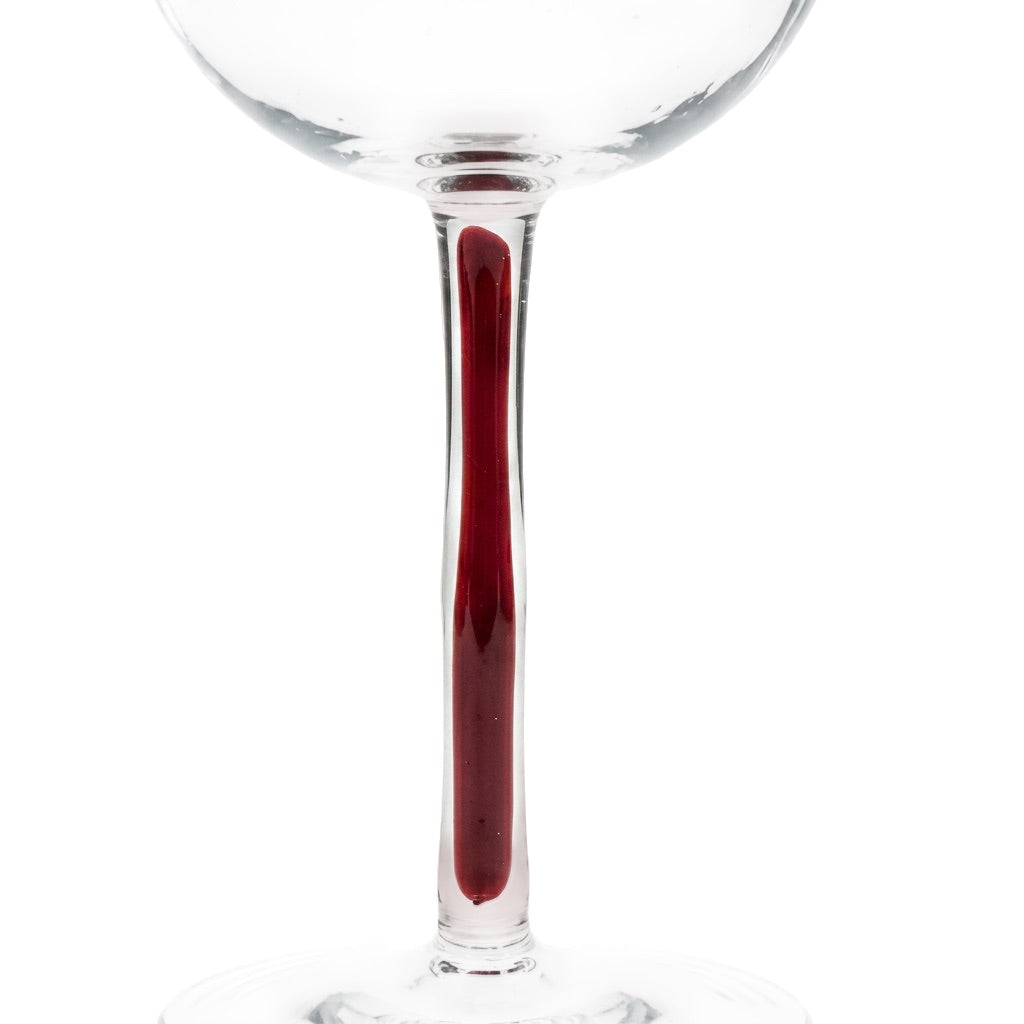
A glass that celebrates red wine. The ruby-red stem visually extends the color of your wine, hand-fused at over 1000°C.
Low stock
Couldn't load pickup availability
- German manufacturer
- Free DHL shipping
- 60-day free return
Product details
Product details
- Production method: Mouth-blown
- Material: Borosilicate glass
- Height: approx. 23.5 cm
- Volume: approx 650 mL
- Weight: 120 g
Materials & Science
Materials & Science
Why borosilicate 3.3 is superior:
Our glass is not just art, it's physics. We use the worldwide standard for laboratory glassware (ISO 3585).
- No thermal shock: Unlike normal glass, our material hardly expands when heated. This means: No internal stresses, no cracks due to temperature fluctuations in the dishwasher.
- Harder surface: Borosilicate glass is harder than conventional glass. Fewer micro-scratches mean fewer breakage points. The glass remains stable for years.
- Chemical purity: Thanks to hydrolytic resistance, there is no "glass corrosion". Your glasses will remain brilliant forever – our blindness guarantee.
What makes the red wine glass so special?
The red wine glass from casa vitri combines a clean, elegant shape with a striking, deep red stem. The bowl is designed to allow red wines to develop their full potential, from fruity and light to full-bodied and robust. A glass you'll be proud to display, instantly elevating any table setting.
How is a red wine glass made?
Each red wine glass is mouth-blown by hand in Germany. Freehand and without a mold, slight variations in shape, wall thickness, or flow occur – these are your visible mark of genuine craftsmanship. No two glasses are alike, and that's precisely what makes each piece unique and full of character.
What is so special about the deep red stem?
The deep red stem is created from fused colored glass, not from surface paint. Visually, it appears as if the red wine flows right into the stem. Every nuance, every subtle variation in tone is the result of handcrafted work. This transforms a utilitarian object into a small work of art for your table.
Is the universal wine glass suitable for everyday use?
We use borosilicate glass, which is exceptionally lightweight yet durable. This makes the red wine glass dishwasher-safe and more suitable for everyday use than many classic thin-walled glasses. You don't have to choose between "beautiful" and "practical"—you can use your favorite glass every day.

Blown freehand – without a mold
Each red wine glass is handcrafted in Germany, freehand, using natural movements and without a mold. Made from borosilicate glass, deep red colored glass and clear glass are fused together step by step at the torch.
Minor variations in shape, wall thickness, or pattern are part of the process and are your visible sign of genuine handcraftsmanship. Each glass thus bears its own unique signature.
Follow the production of the glass
For those special moments
Collections
-
Handmade wine glasses from a German manufacturer
Our mouth-blown wine glasses combine traditional German craftsmanship with modern design. Made...
-
Mouth-blown champagne and sparkling wine glasses
For special moments with Champagne, Crémant, Franciacorta, Cava or sparkling wine: our...
-
Special Editions: Glass art with character
When craftsmanship meets humor: Our Special Editions are more than just drinking...
-
Mouth-blown drinking glasses & designer tumblers
Water is the element of life, so why drink it from an...
Ich habe zwei handgemachte Rotweingläser von Casa Vitri gekauft und bin rundum begeistert. Die Gläser überzeugen durch ihre außergewöhnliche Eleganz, perfekte Balance und eine spürbare Liebe zum Detail. Jedes Glas wirkt wie ein Unikat – fein gearbeitet und angenehm in der Hand .
Besonders beeindruckend ist, wie sehr sie das Weinerlebnis verbessern: Aromaentfaltung, Mundgefühl und Präsentation gewinnen deutlich. Man merkt sofort, dass hier echtes Handwerk und Designverständnis zusammenkommen.
Verarbeitung, Verpackung und Gesamteindruck sind auf höchstem Niveau. Wer Wert auf Qualität, Ästhetik und ein besonderes Trinkerlebnis legt, wird an diesen Gläsern große Freude haben.
Ich habe ein Rotweinglas mit rotem Stiel als Geschenk für meinen Vater bestellt. Er hat sich sehr gefreut und wird sein abendliches Gläschen Wein jetzt noch stilvoller genießen. Für Weinkenner, die sonst schon alles haben, eine gute Wahl für ein Geschenk.
Der Preis hat mich zuerst zögern lassen. Nach dem Auspacken und Trinken war mir aber klar, wofür man bezahlt.
Das Glas von casa vitri fühlt sich völlig anders an als normale Weingläser, vor allem am Stiel und Rand. Weicher, runder und einfach angenehmer zu trinken. Zudem sieht das Glas in echt noch viel schöner aus als auf den Bildern.
Blog posts
View all-
Borosilicate glass: What makes this material so...
Borosilicate glass at a glance Designed for extreme conditions. Borosilicate glass 3.3 was developed by Otto Schott in Jena at the end of the 19th century. Its low coefficient of...
Borosilicate glass: What makes this material so...
Borosilicate glass at a glance Designed for extreme conditions. Borosilicate glass 3.3 was developed by Otto Schott in Jena at the end of the 19th century. Its low coefficient of...
-
The world of glass art: An overview of all tech...
3,000 years, countless techniques, a fascination Glass is one of humankind's oldest and most versatile materials. Since the invention of the glassblower's pipe over 2,000 years ago, artists and craftspeople...
The world of glass art: An overview of all tech...
3,000 years, countless techniques, a fascination Glass is one of humankind's oldest and most versatile materials. Since the invention of the glassblower's pipe over 2,000 years ago, artists and craftspeople...
-
Wabi-sabi at the dining table: Why imperfect wi...
Wabi-Sabi at the dining table A slight ripple on the rim of the glass. A subtle asymmetry in the bowl. Flaws? No – signatures. Discover the Japanese philosophy that explains...
Wabi-sabi at the dining table: Why imperfect wi...
Wabi-Sabi at the dining table A slight ripple on the rim of the glass. A subtle asymmetry in the bowl. Flaws? No – signatures. Discover the Japanese philosophy that explains...