

Drinking Glasses Made from Recycled Glass: Manufacturing, Quality and Care
By the casa vitri editorial team · Cover photo: Lafiore
A drinking glass made from recycled glass is newly manufactured. Its raw material has a previous history: suitable glass fragments are processed, melted and shaped again. Waste glass can become a new glass for your table.
Recycled glass can become high-quality drinking glasses. Clean, suitable fragments and careful processing are what matter. When choosing these glasses for your table, consider how they are made, their quality and their care. Lafiore in Mallorca provides a concrete example of mouth-blown drinkware.

Which Waste Glass Can Be Used?
Glassmaking can draw on different sources:
- Used glass packaging, such as collected bottles and jars processed for reuse as a raw material.
- Production fragments, including breakage from glass manufacturing that can be returned to production.
The German Environment Agency describes both routes. The sources used by a particular workshop need to be established separately. Lafiore publicly describes using recycled material, without specifying the exact mix of these sources.
The description recycled glass does not itself state a percentage. A product may use partly or entirely recycled glass material. Recyclable, by contrast, describes the possibility of future reprocessing.
How Does It Become a New Drinking Glass?

1. Sorting the Fragments and Removing Unwanted Materials
A glass furnace does not receive an unsorted mixture of everything found in a recycling bank. The material must suit the intended melt. Processing plants remove materials such as ceramics, stones and metals, while crushing and sorting the glass by colour.
A glass recycling operator illustrates how screens, magnets and optical equipment work together. This preparation supplies the raw material before glassmaking begins.
2. Melting the Material
The prepared fragments enter the melting furnace, becoming a workable mass of glass again. The previous bottle or container no longer determines the new object's shape.
3. Blowing and Shaping the Hot Glass
In traditional furnace glassblowing, a gather of hot glass sits at the end of a hollow blowpipe. The glassmaker blows air into it and shapes the material through movement, tools or a mould. The Corning Museum of Glass explains this process.
Recycling and mouth-blowing are different stages: one concerns the raw material, the other its shaping.
4. Cooling in a Controlled Way
The finished piece should not simply cool as quickly as possible. Controlled cooling limits the stress remaining inside it. This process, called annealing, matters because highly stressed glass can break more easily under mechanical or thermal shock.
Why Do Glass Fragments Save Raw Materials and Energy?
When made from new raw materials, glass is formed using ingredients including silica sand, soda ash and limestone. That mixture must undergo chemical reactions to become glass. Glass fragments have already passed through this transformation and need to be melted again. Their processing therefore requires less energy, even though the furnace still reaches high temperatures. British Glass explains this distinction for glass packaging manufacture.
For industrial glass packaging, FEVE's assessment based on 2019 production data reports 25.4 per cent less melting energy when using entirely recycled glass fragments instead of entirely virgin raw materials. This industry comparison is not a measurement of Lafiore drinking glasses.
Recycling therefore reduces the use of new raw materials and some energy demand. Processing, the furnace and transport remain part of production.
Does Glass Lose Quality When It Is Recycled?
Suitable glass can be melted repeatedly without necessarily losing its fundamental material properties. FEVE explains this potential for the closed-loop recycling of glass packaging. It depends on proper collection, treatment and reprocessing.
The challenge is maintaining suitable quality in the fragments. Unwanted materials and incompatible glass compositions need to be removed. The German glass recycling trade association describes specific quality requirements for this.
For your drinking glass, recycled content alone is not a judgement of quality. A well-finished rim and a stable base matter alongside a shape you enjoy. Small variations in handmade pieces are different from cracks or sharp edges.
Mouth-blowing and glass type describe other aspects: mouth-blown refers to manufacture, while borosilicate glass, for example, refers to composition. Care and suitable use depend on the specific finished product.
How Does Lafiore Work with Recycled Glass?
In Mallorca, Lafiore combines recycled material with artisanal glass design. On its brand website, the manufacturer describes 100 per cent recycled material as the basis of its glassmaking.
Its own process description from 2018 gives a more tangible picture: it specifies melting furnaces at around 1,200°C. The makers take a glowing mass of glass from them, then blow and shape it before it cools too far. Lafiore also describes using mineral pigments for its colours.
Which Design Suits Your Table?
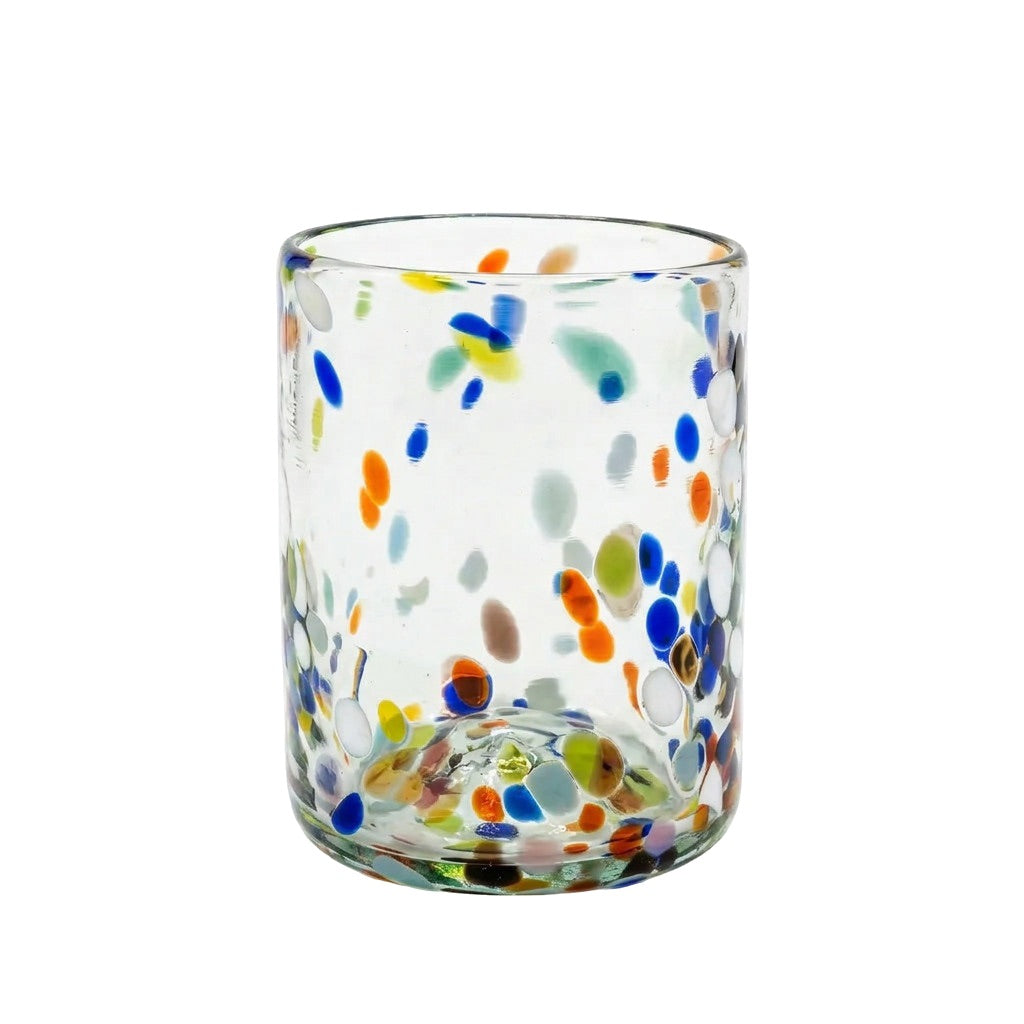
Our selection shows different outcomes of that design. For a lively colour accent, consider the Classic Tumbler Confetti Multi with its multicoloured flecks. With white dinnerware, you can pick up one of the glass colours in your napkins and keep the remaining decorations simple.
For a quieter palette, combine the Classic Tumbler Mare Turquoise with white plates and natural-coloured linen. Its transparent turquoise glass keeps the contents visible.
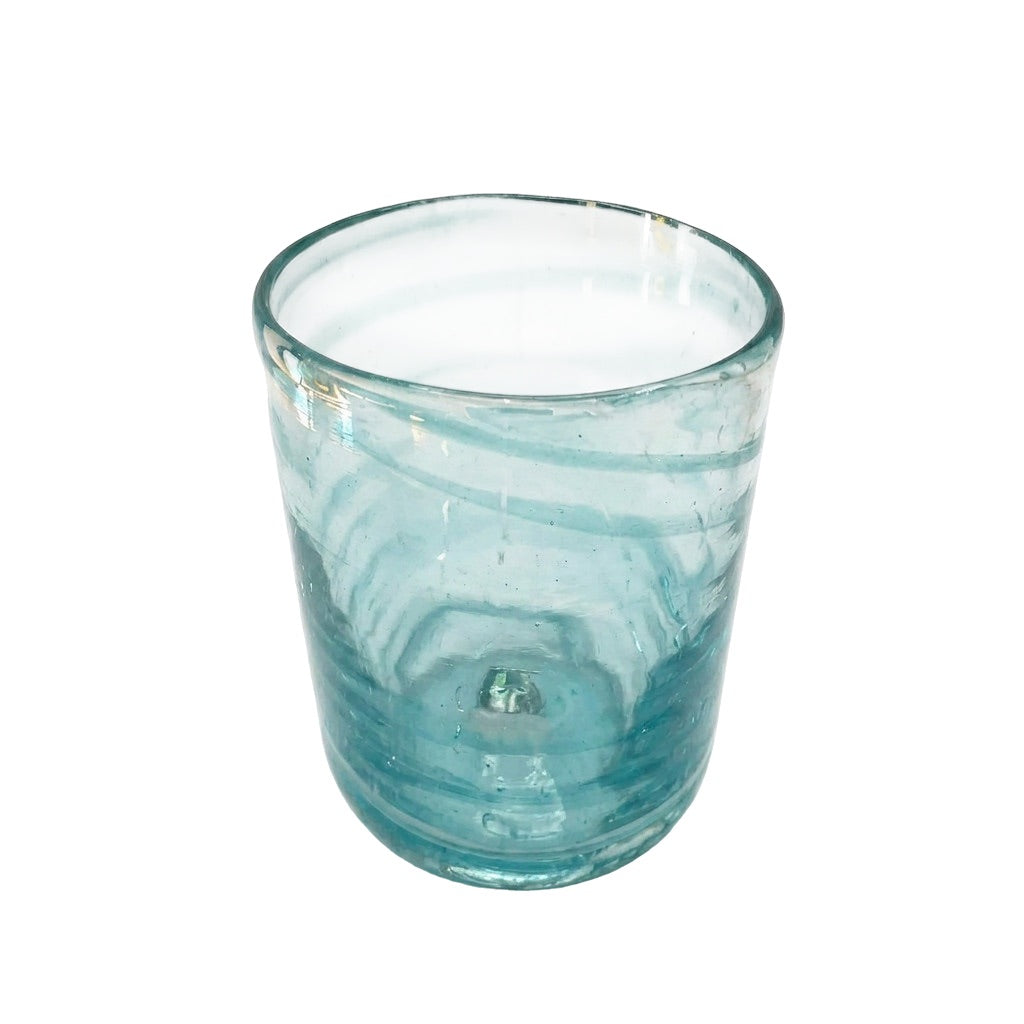
These colours and patterns are part of the design. A green tint or an air bubble alone cannot tell you a particular recycled content. Choose the pattern to suit your taste and the use to match the care instructions.
How Should You Care for Lafiore Drinking Glasses?
Lafiore recommends washing by hand. For domestic dishwashers, it specifies suitable cleaning products and programmes no hotter than 60°C; otherwise, pieces can lose their original shine. It advises against heating liquids in the microwave. Avoid sudden temperature changes, which can cause cracks or breakage.
These instructions apply to using Lafiore pieces. For other makers, follow the relevant product's care guidance.
Can a Recycled Drinking Glass Go Into a Glass Recycling Bank?
In Germany, drinking glasses do not belong in the usual collection banks for glass packaging. That includes pieces made from recycled material. The German Environment Agency's household waste guide distinguishes glass packaging from tableware and other glass objects. Follow your municipality's disposal instructions. Outside Germany, check local collection rules.
The material cycle and collection route are different things. The possibility of reprocessing glass does not mean every glass object belongs in the same collection bank.
What Should You Check When Choosing a Glass?
Use this guide to assess the product information and the finished glass:
| Criterion | What you can check | Why it helps |
|---|---|---|
| Material description | Does the maker state a recycled percentage or simply say recyclable? | You can distinguish material already used in manufacture from possible future recycling. |
| Rim and surface | Are there visible cracks, chips or sharp edges? | Damage differs from the intended variations of handmade pieces. |
| Stability and handling | Place the glass on a level surface and check whether it feels comfortable to hold. | Recycled content does not tell you how well the finished piece fits your daily use. |
| Care and use | Do the maker's instructions fit your washing routine and intended drinks? | For Lafiore, handwashing and avoiding sudden temperature changes form part of the choice. |
When choosing a drinking glass made from recycled glass, consider a clear material description, workmanship and suitable care together. The design helps you choose the piece you will enjoy on your table.
Read more and explore: